



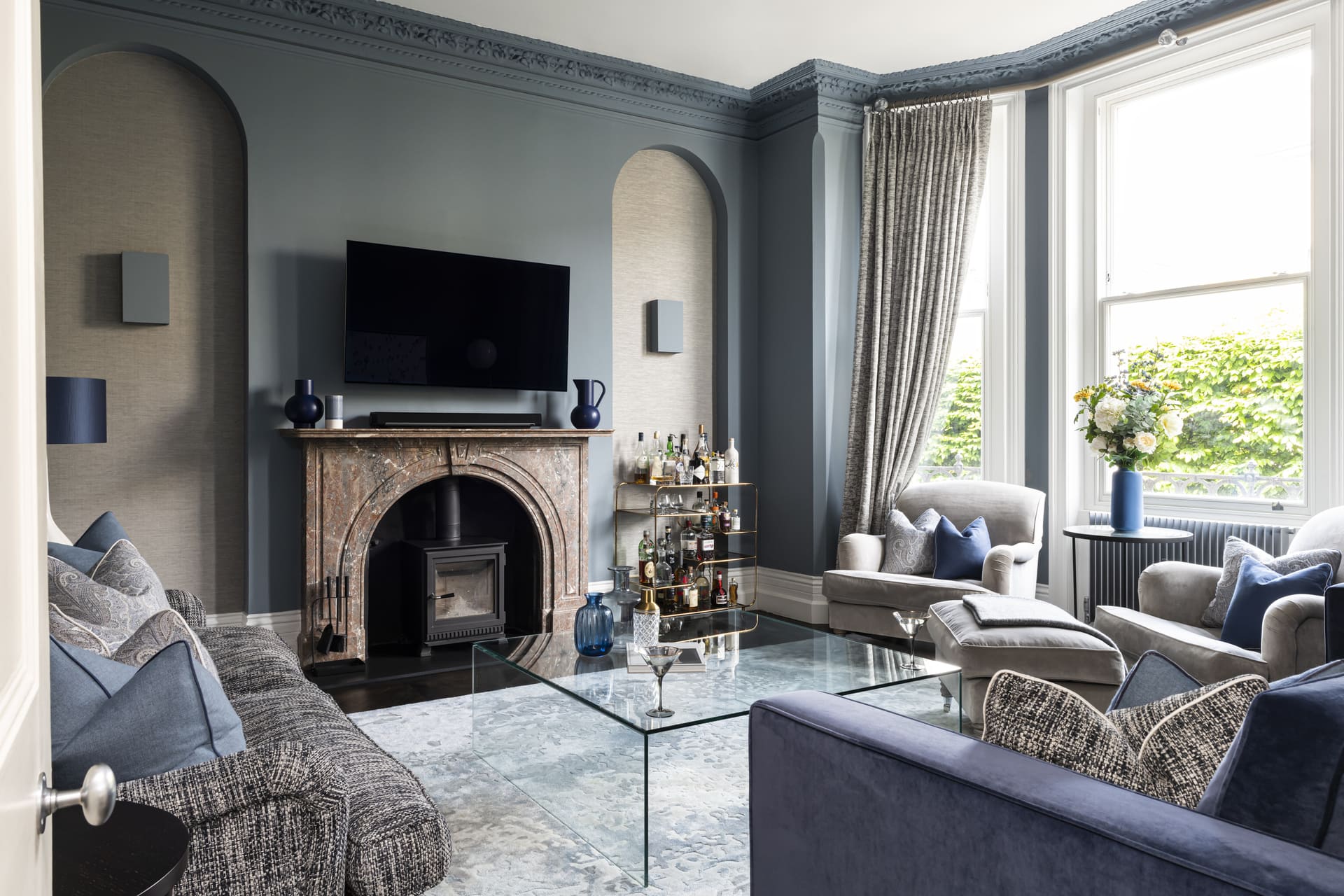
A refined formal living room where architectural heritage and contemporary design meet in a London family home.
Intro
The dawn of 2026 feels different. As the morning mist hangs over the Thames and we settle into the rhythm of a new year, the frantic chase for “the next big thing” has been replaced by something far more considered. We have moved beyond the era of the Pinterest-perfect, staged interior.
Today, London’s most discerning homeowners are no longer asking, “What looks good?” Instead, they are asking, “How does this room make me feel, and how hard is it working for my wellbeing?”
We are entering the age of Intelligent Individuality. At Emma Green Design, we see this as a shift from staging to storytelling. It marks a move away from the cold minimalism that defined the early 2020s, and towards a lived-in luxury that prioritises emotional resonance over visual perfection.
Trends may provide the palette, but it takes a seasoned eye to ensure these shifts enhance, rather than date, a premium London home.
Lived-in Luxury: The Shift from Staged Rooms to Storytelling
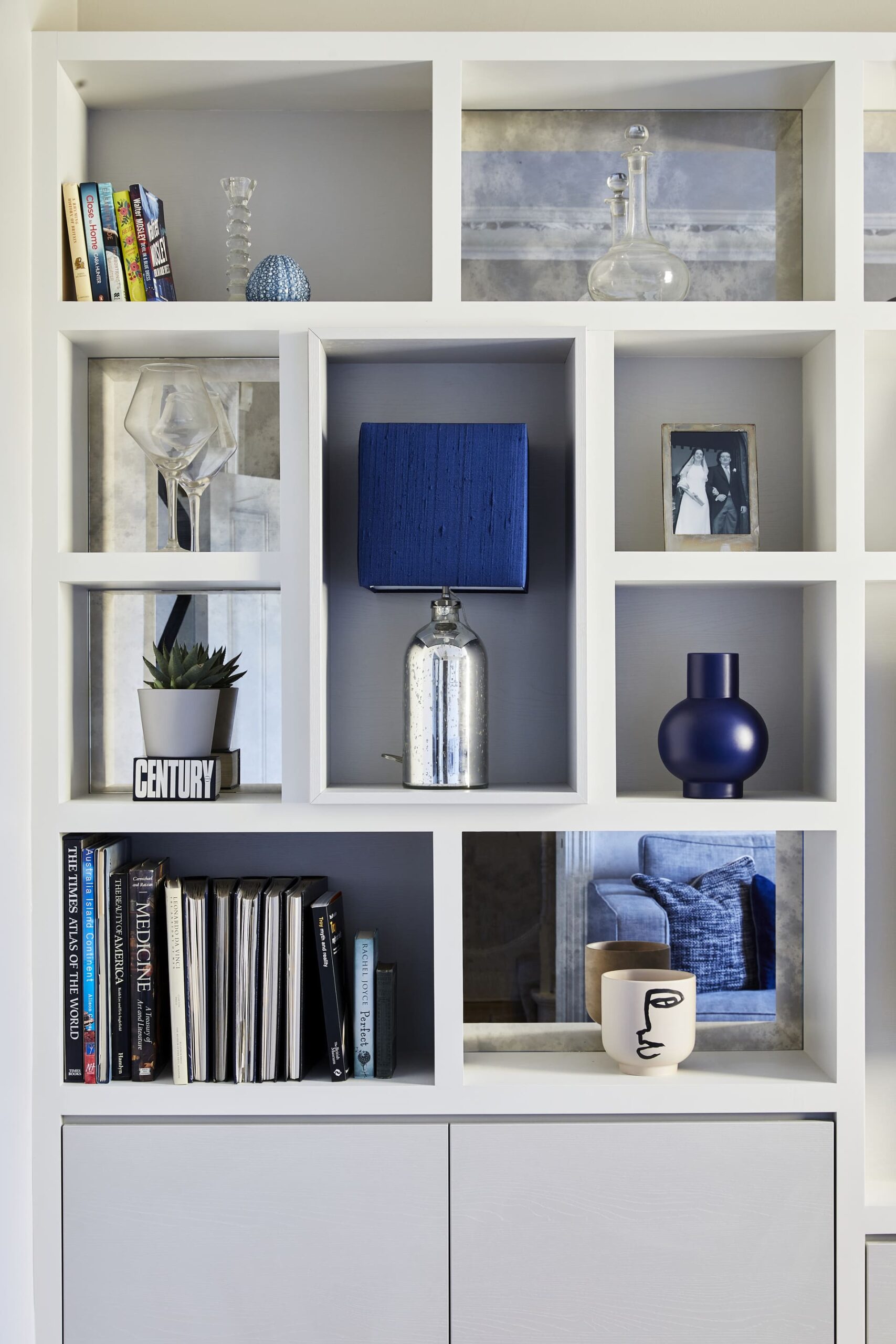
Curated shelving and bespoke joinery bring personality and quiet structure to this lived-in family space.
The showroom look is officially a relic of the past. In 2026, we are embracing the beauty of the unfinished masterpiece. This is not about disorder. It is about gentle clutter, the curated display of a life well lived.
Materials now need soul. High-character woods such as burl and smoked oak bring depth, warmth, and narrative. We are also seeing a strong return to living finishes. In recent projects, lacquered surfaces have been replaced with unlacquered brass and chrome. These metals develop a patina over time, quietly recording the touch of the people who live there.
Artisanal craftsmanship has replaced mass-produced accents. Hand-painted Delft-style tiles, sculptural furniture, and pieces that feel closer to gallery objects than décor now take centre stage.
The aim is trend-proofing the personal, ensuring a home feels intentional and curated, rather than chaotic.
Designing for Neuro-Aesthetics: The Evolution of Biophilic Wellness
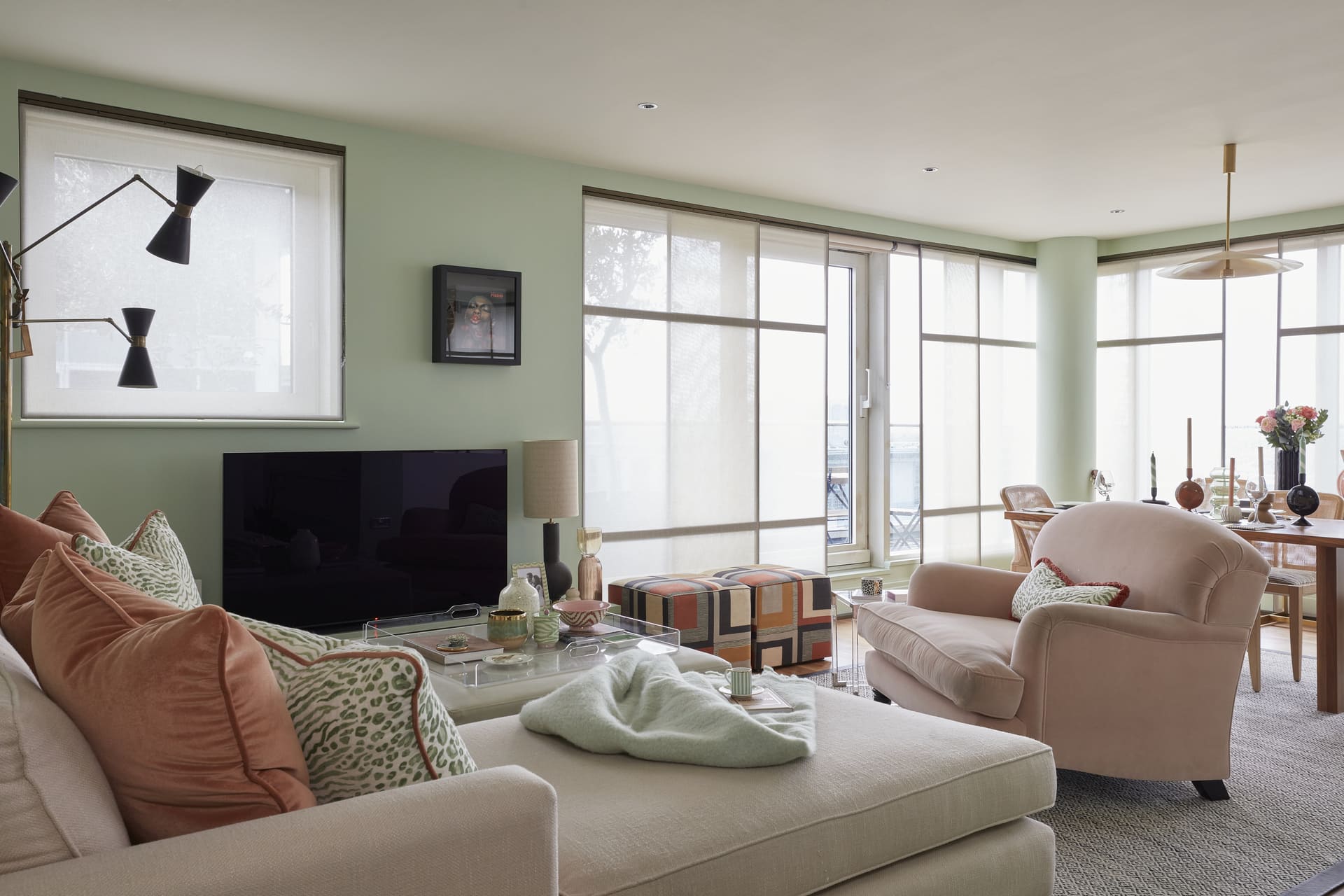
Soft colour palettes and natural light create an emotionally restorative living environment.
Wellbeing in 2026 goes far beyond placing a houseplant in the corner. We are now designing for neuro-aesthetics, the science of how our surroundings influence brain chemistry, mood, and long-term wellbeing.
Shape, texture, and colour are chosen with intention. Palettes featuring tones such as Transformative Teal and Wax Paper neutrals are not simply beautiful. They are biologically calming. For clients in areas such as Chelsea and Belgravia, where pace and pressure are high, homes are increasingly designed as genuine sanctuaries.
This approach sits at the heart of our work in wellness-focused residential design, where homes are shaped to support how people feel and function on a daily basis.
As a result, we are seeing the rise of dedicated wellness suites. Infrared saunas, cold-plunge zones, meditation corners, and restorative bathrooms are now integrated seamlessly into the fabric of the home.
Architectural biophilia plays a key role too. Indoor planting systems, raw stone, and natural materials help dissolve the boundary between garden and gallery.
Thoughtful interiors in 2026 are less about surface trends and more about how each decision performs over time.
The Invisible Smart Home: Integrating Technology with Tactile Craftsmanship
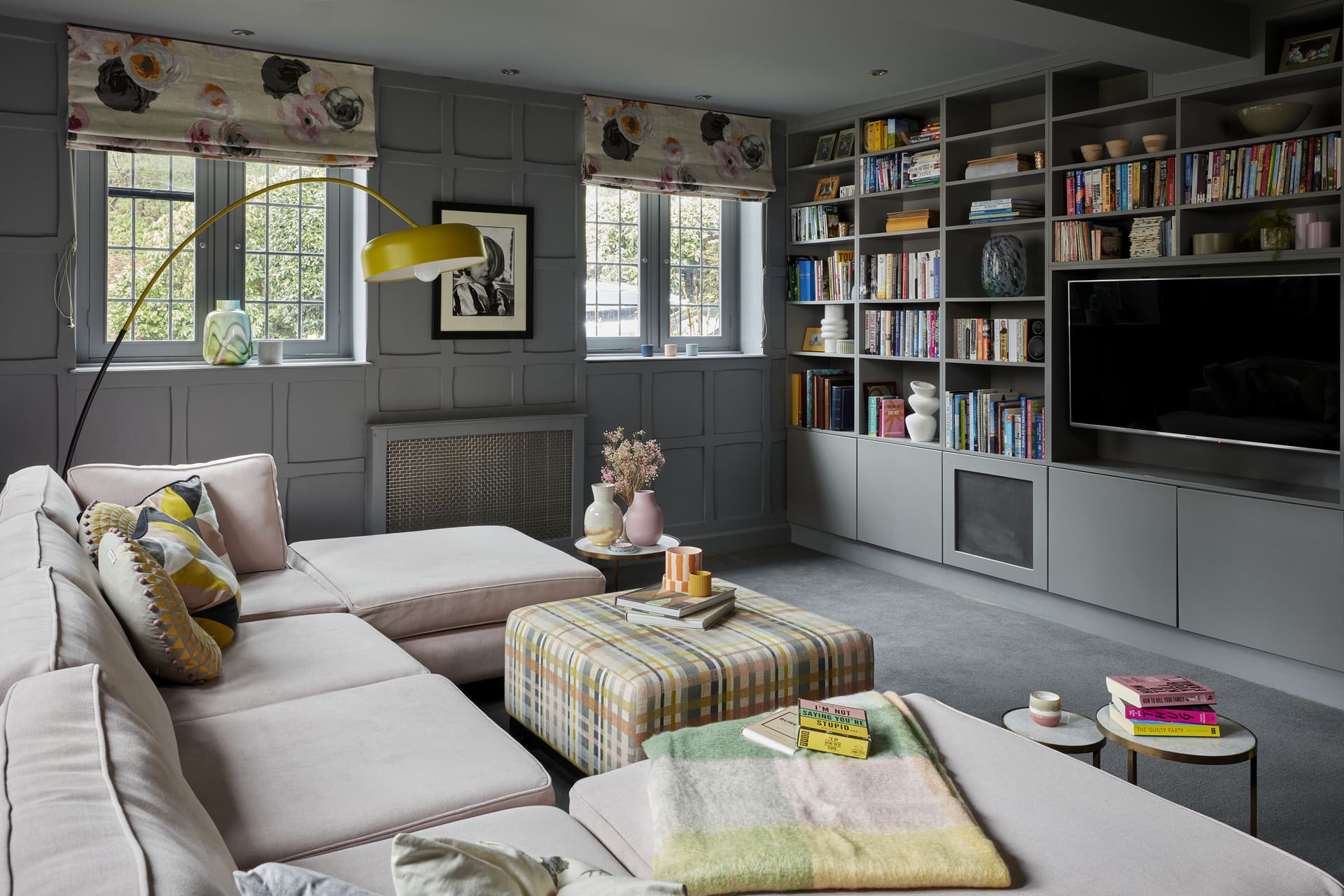
Technology is seamlessly integrated into bespoke joinery, allowing the architecture to remain the focus.
The most sophisticated technology in 2026 is the technology you cannot see.
The rise of the analogue home is a direct response to screen fatigue. Rather than showcasing technology, it is concealed behind craftsmanship.
AI-driven lighting systems now follow circadian rhythms, subtly adjusting colour temperature and intensity as daylight fades. Hidden speakers, smart surfaces, and integrated systems allow homes to perform effortlessly, without visual clutter.
A particular favourite for 2026 is hacked and wireless lighting. High-CRI, cordless, rechargeable lamps enable flexible, ambient-only lighting schemes. Colours such as Fresh Purple are carefully selected because they perform beautifully under both smart LED lighting and natural afternoon light in London homes.
Beyond the Open Plan: Embracing “Broken-Plan” Living for Privacy and Focus
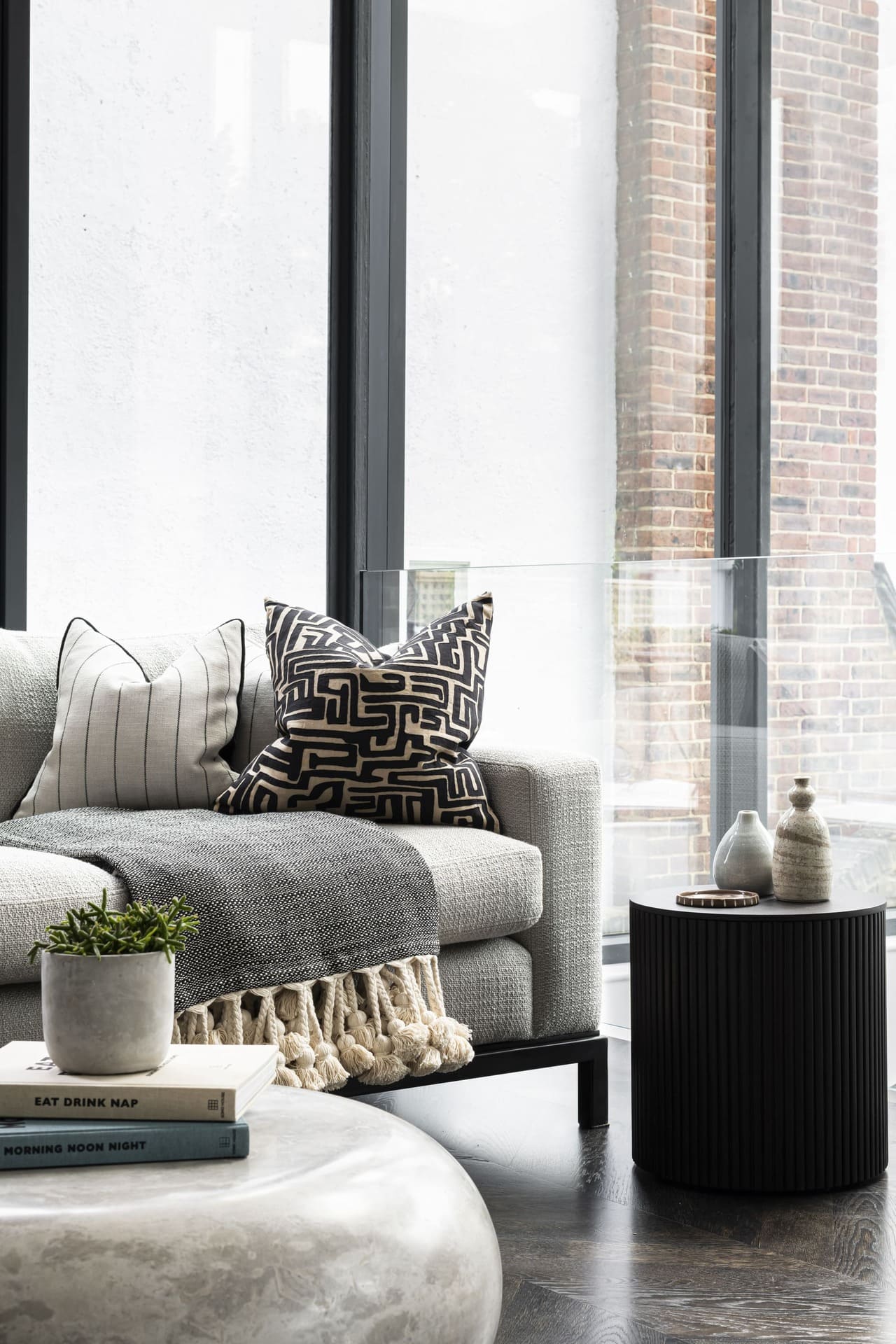
Broken-plan living allows different activities to coexist while maintaining comfort and flow.
The era of the vast, echoing open-plan layout is evolving. While light and flow remain important, clients are increasingly prioritising privacy, comfort, and acoustics.
This is where broken-plan living comes into its own.
Through acoustic zoning, using oversized sofas, layered textiles, bespoke cabinetry, and carefully considered layouts, we create quiet pockets within a home without sacrificing openness.
It is a form of bespoke space planning that allows London homes to feel both generous and intimate, adapting naturally to modern family life and hybrid working.
Work-from-home spaces have also matured. The makeshift cloffice has given way to the deep-work suite. These are high-performance rooms with professional lighting, soundproofing, and intelligent layouts designed to support focused decision-making.
With the right design lens, even the most complex London layouts can adapt fluidly to changing family dynamics.
Bio-Innovation and Heritage Sustainability: The Future of Eco-Conscious Luxury
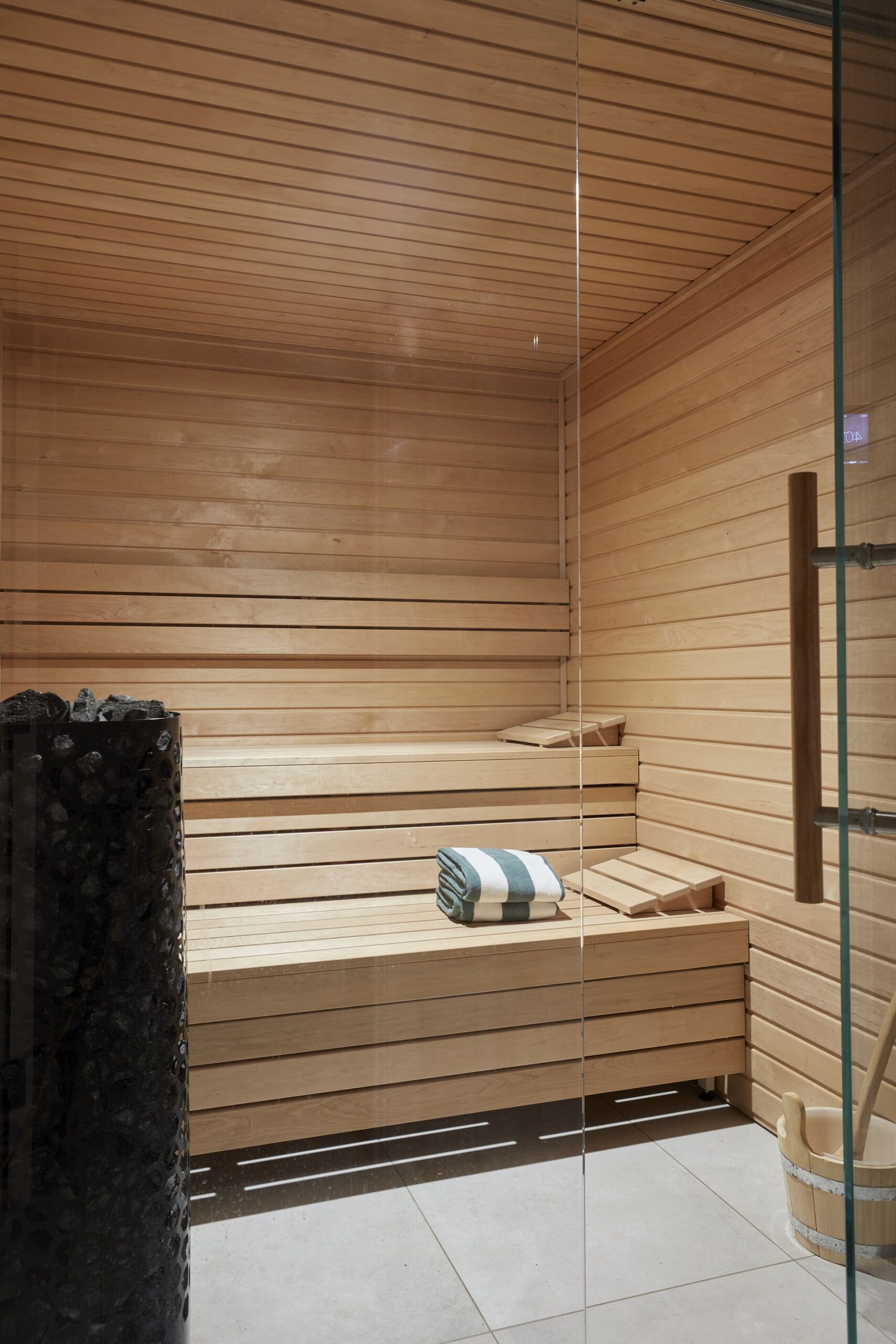
Wellness spaces are increasingly designed as integral parts of the home rather than luxury add-ons.
Sustainability is no longer a buzzword. It is a baseline expectation. In 2026, however, sustainability is also becoming more nuanced.
We are seeing a rise in bio-innovation, with materials such as mycelium leather, seaweed-based textiles, and recycled composites entering the luxury market in meaningful ways.
Alongside this, heritage sustainability is gaining renewed importance. By working with British artisans, sourcing Welsh blankets, and prioritising local craftsmanship, carbon footprints can be reduced without compromising elegance or longevity.
This balance of innovation and tradition is something we regularly explore through bespoke joinery and British craftsmanship across our residential projects.
True sustainable luxury now balances progress with provenance. It is future-focused, yet deeply rooted.
The 2026 Colour Narrative: Embracing “New Darks” and Tonal Layering
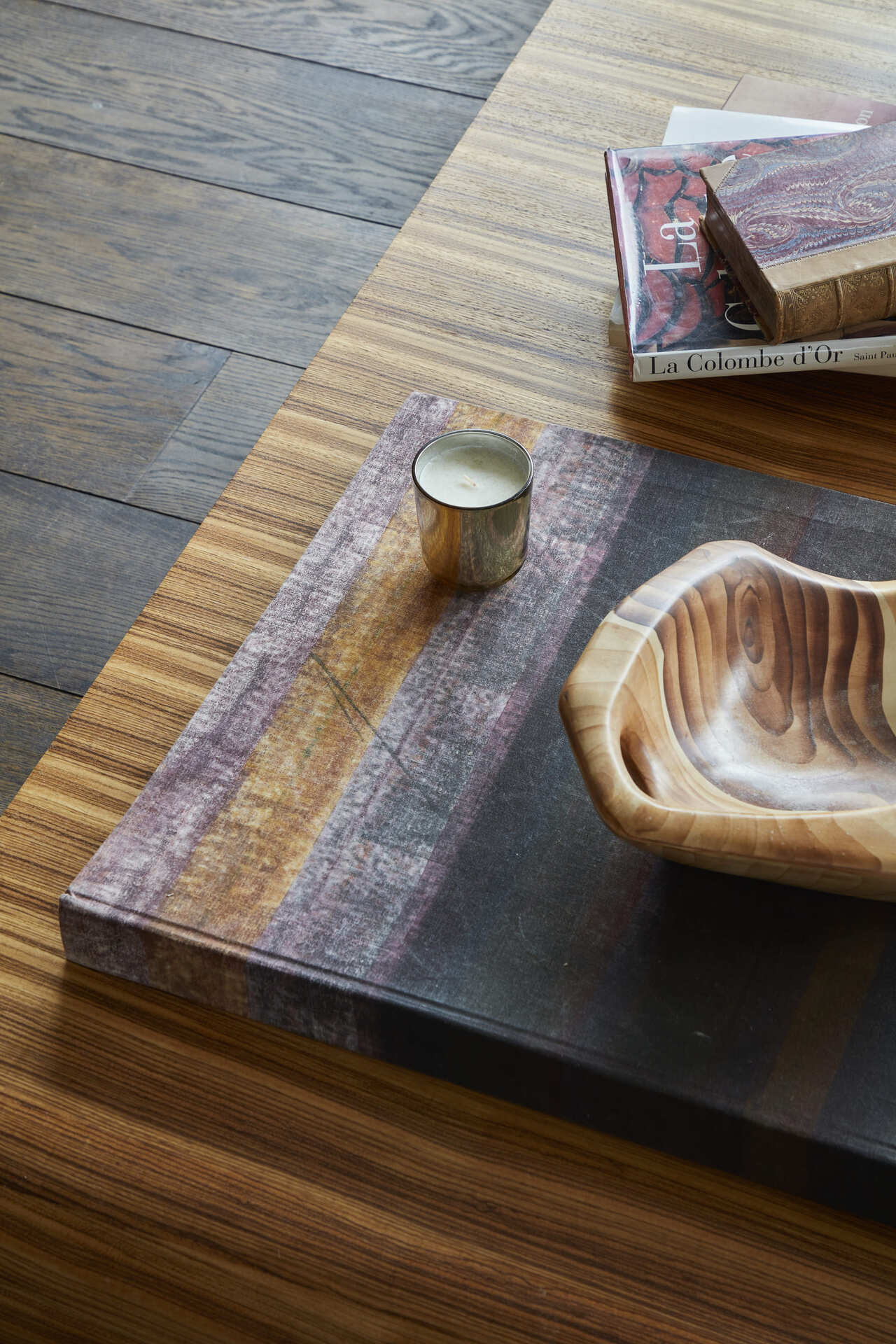
Natural materials and tactile finishes add depth, warmth, and longevity to everyday spaces.
The colour palette of 2026 is grounded, atmospheric, and confident. Cool greys have faded, replaced by the rise of the new darks.
Cocoa powder and coffee-bean browns introduce enveloping warmth and depth, while near-neutrals such as warm whites and wax-paper tones create softness and light.
The defining technique is tonal decorating. By layering multiple intensities of a single hue, we create architectural depth and visual richness. This approach is particularly effective in smaller London homes, where colour becomes a powerful spatial tool.
In 2026, a home must work hard. It should support wellbeing, performance, and comfort, while still feeling soulful, personal, and collected.
Navigating this shift requires more than a shopping list. It calls for an expert translator, someone who understands how to balance the science of living with the art of design.
If you are ready to bring the most refined interior trends of 2026 into your home, contact Emma Green Design As a BIID-registered London studio, we specialise in translating future-focused ideas into timeless, intelligent interiors tailored to the way you live.
Explore our latest portfolio to see how intelligent individuality comes to life.
Interior Design Trends 2026: Frequently Asked Questions
Are 2026 interior design trends suitable for long-term homes?
Yes. The most significant shift in 2026 is away from fast-moving aesthetics and towards intelligent, enduring design decisions that support daily life, wellbeing, and longevity.
How can I introduce these ideas without redesigning my entire home?
Many of these principles can be introduced through targeted changes such as lighting, spatial zoning, material upgrades, or colour strategy, often without the need for a full renovation. This is something we frequently explore as part of our interior design process.